
A senior paralegal at a midsize firm gave her two weeks' notice on a Tuesday. By Friday of the following week, she was gone. She had been with the firm for twelve years. She had drafted, formatted, or proofread roughly 8,000 documents in that time. She knew the local ALJ preferences. She knew which judge wanted exhibits tabbed in a specific way. She knew the firm's house style for client letters. She knew where everything was. Most of that lived in her head.
The day after her last day, the new paralegal asked the managing attorney how the firm formatted pre-hearing briefs. The managing attorney said "however we always do it." The new paralegal asked if there was a template. There was, somewhere. Nobody could find it on the shared drive.
This is a story I have heard, with small variations, at every law firm I have worked with. It is the story of how institutional knowledge actually lives at a law firm. It is rarely written down. It is held in the heads of the people who do the work. And when those people leave, the knowledge leaves with them.
The quiet cost of paralegal turnover
The American Bar Association tracks attorney turnover. It does not track paralegal turnover as carefully, but the data that does exist suggests the average paralegal stays at a firm for about four years. At a 15-person firm with five paralegals, that means roughly one paralegal turns over every year. That sounds manageable. Until you count what they take with them.
A senior paralegal at a Social Security disability firm builds, over years of work, a working knowledge of how the local hearing offices operate. Which ALJs are stricter on physical RFC analysis. Which ones lean harder on mental impairment claims. Which medical experts the firm has had luck with. Which clients tend to need extra prep before testifying. None of that lives in a manual. It lives in someone's experience.
When that paralegal leaves, the firm loses access to that knowledge. The new paralegal will eventually rebuild a version of it. But during the year or two it takes to rebuild, the firm operates with a degraded knowledge base. Cases get prepped less efficiently. Mistakes that the senior paralegal would have caught get through. The firm pays the cost of that turnover for far longer than the two weeks of notice.
Why this knowledge does not get written down
Every firm tells itself it should document its processes better. Most firms do not. There are real reasons.
The first reason is that the work is the priority. A senior paralegal who has 40 active matters does not have time to also write a document explaining how she handles intake interviews. The intake interviews are what the firm pays her to do. The documentation is what nobody pays her to do.
The second reason is that the knowledge is hard to articulate. Asking the senior paralegal "how do you know which medical records to flag for the attorney?" gets a useful answer. Asking her to write down the answer in a way that a new paralegal can apply across hundreds of cases is much harder. Tacit knowledge resists explicit documentation. The expert often cannot fully describe what she does.
The third reason is that documentation, once written, decays. The firm writes a SOP for intake interviews in 2022. By 2024, the process has shifted in three small ways nobody captured. The SOP is now wrong, but nobody updates it because the people who do the work know the new way. The documentation becomes a graveyard rather than a living reference.
So firms keep the knowledge in people's heads. It works fine until someone leaves. Then it does not.
What actually walks out the door
When a senior paralegal leaves, six categories of knowledge go with her. Most managing attorneys can only name two or three of them off the top of their head.
The first category is template knowledge. Where the master templates live. Which version is current. Which fields need to be customized for each case. Which formatting quirks the firm has standardized on. A new paralegal often spends weeks just reconstructing where the right files are.
The second category is workflow knowledge. How a case moves through the firm from intake to closing. Who hands what to whom. Which steps the firm has refined and which steps are still ad hoc. This usually lives in the workflow itself rather than in any document. The new paralegal learns it by absorbing it, slowly.
The third category is judicial and opposing-counsel knowledge. What the local ALJs prefer. Which opposing counsel is reasonable and which one is going to fight every motion. Which medical examiners are credible. This is the kind of knowledge that takes years to accumulate. Losing it is expensive.
The fourth category is client knowledge. Which clients need extra hand-holding. Which clients are likely to miss appointments. Which family members of which clients are useful contacts. The senior paralegal often knows more about the firm's active clients than anyone else.
The fifth category is case-pattern knowledge. "We have done this kind of case before, and here is what worked." This is institutional memory in the strictest sense. The firm has fought this exact fact pattern. The records of how it was fought exist somewhere in the case files. The senior paralegal knew where to look.
The sixth category is judgment. When to escalate to the attorney. When to push back on a client. When something feels off about a medical report. When to send a follow-up letter. This is the hardest to replace because it is the most personal.
Why the traditional fixes do not work
Firms have tried for decades to solve this problem. The standard approaches all have known limitations.
The exit interview captures whatever the departing paralegal remembers to say in a 45-minute session on her last day. She is checked out. She forgets most of what she knows. The exit interview produces a list of "things to remember" that is helpful and incomplete.
The handoff period assumes the new paralegal arrives before the old one leaves. In practice, hiring takes months. The old paralegal leaves. The position is empty for six weeks. The new paralegal arrives with no handoff at all.
The SOP document is written, used for the first month, and then forgotten. It is not where the new paralegal looks when she has a real question, because real questions never quite fit the SOP's structure.
The shared drive holds all the firm's documents, but nobody can find anything in it. Search returns 200 results for "demand letter." Without the senior paralegal pointing to the right one, the new paralegal picks the wrong one half the time.
The firm wiki is maintained for six months and then abandoned. The senior people who could have written useful entries are busy. The junior people who have time do not yet know enough to write useful entries.
What changes when the AI is the knowledge base
The reason I find this problem interesting is that AI changes the economics of capturing institutional knowledge.
Traditional documentation requires someone to sit down and write. AI does not. If a firm's AI is trained on the firm's actual work product, every brief, every demand letter, every intake summary, every email to a client, the institutional knowledge accumulates passively. The senior paralegal does not have to write down "how we handle onset date arguments." The fifty cases where she handled onset date arguments are in the system. The AI can describe how the firm handled them when asked.
This is not a perfect substitute for an experienced paralegal. The AI does not have her judgment. It does not know that Mrs. Chen needs a follow-up call before every hearing. It does not have the relationships she built. But it can preserve the document-based knowledge in a way no SOP ever has, and it can do so without anyone having to maintain it.
That is the shift. Not "AI replaces the paralegal." AI captures and preserves the document-based portion of the paralegal's knowledge, so that when she leaves, the firm does not start from zero.
How this actually works in practice
I co-founded DVLP Studio and we build a product called DVLPstudio Legal Intelligence. Knowledge preservation is one of the things firms tell us drove their decision to deploy it. Full disclosure on the bias.
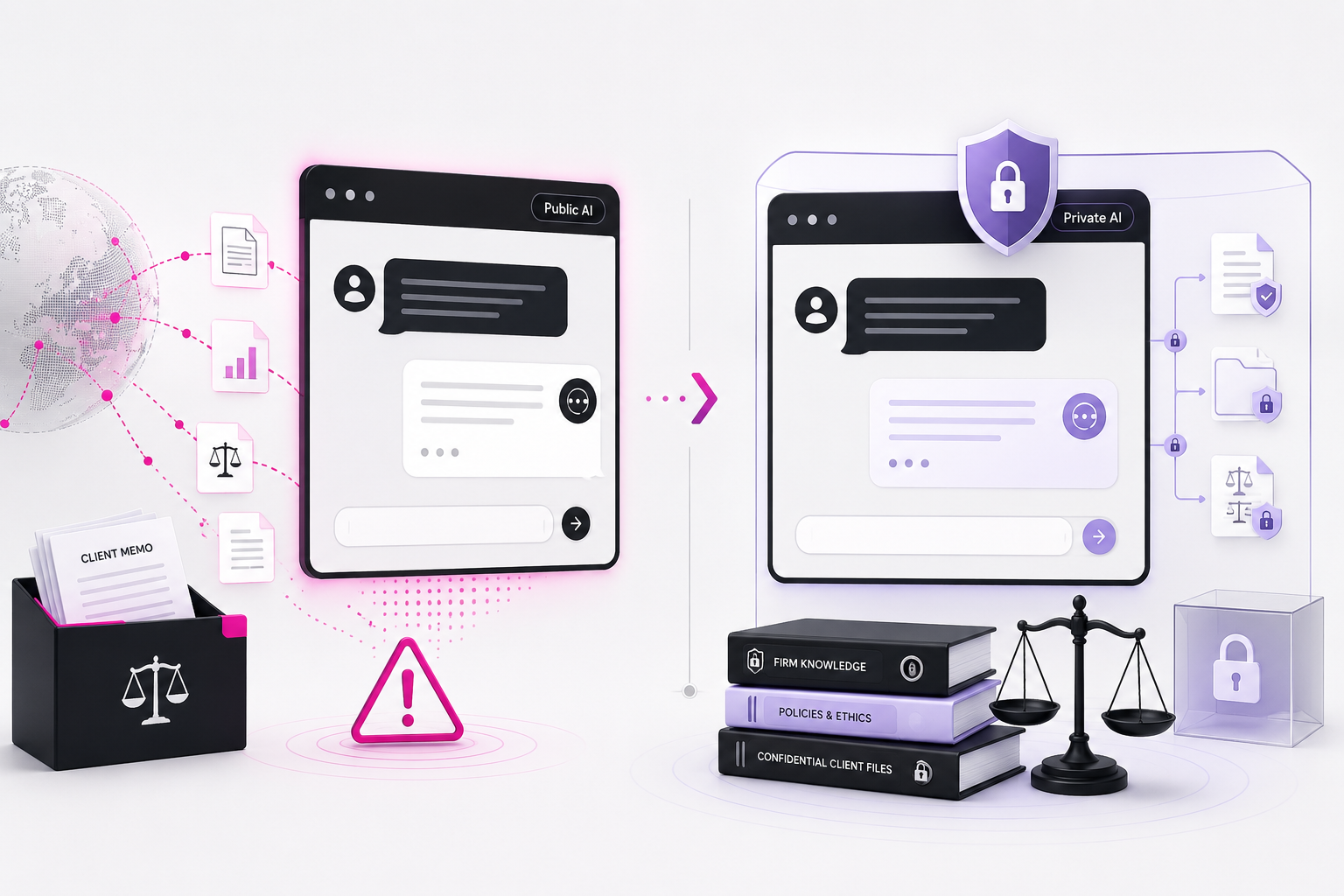
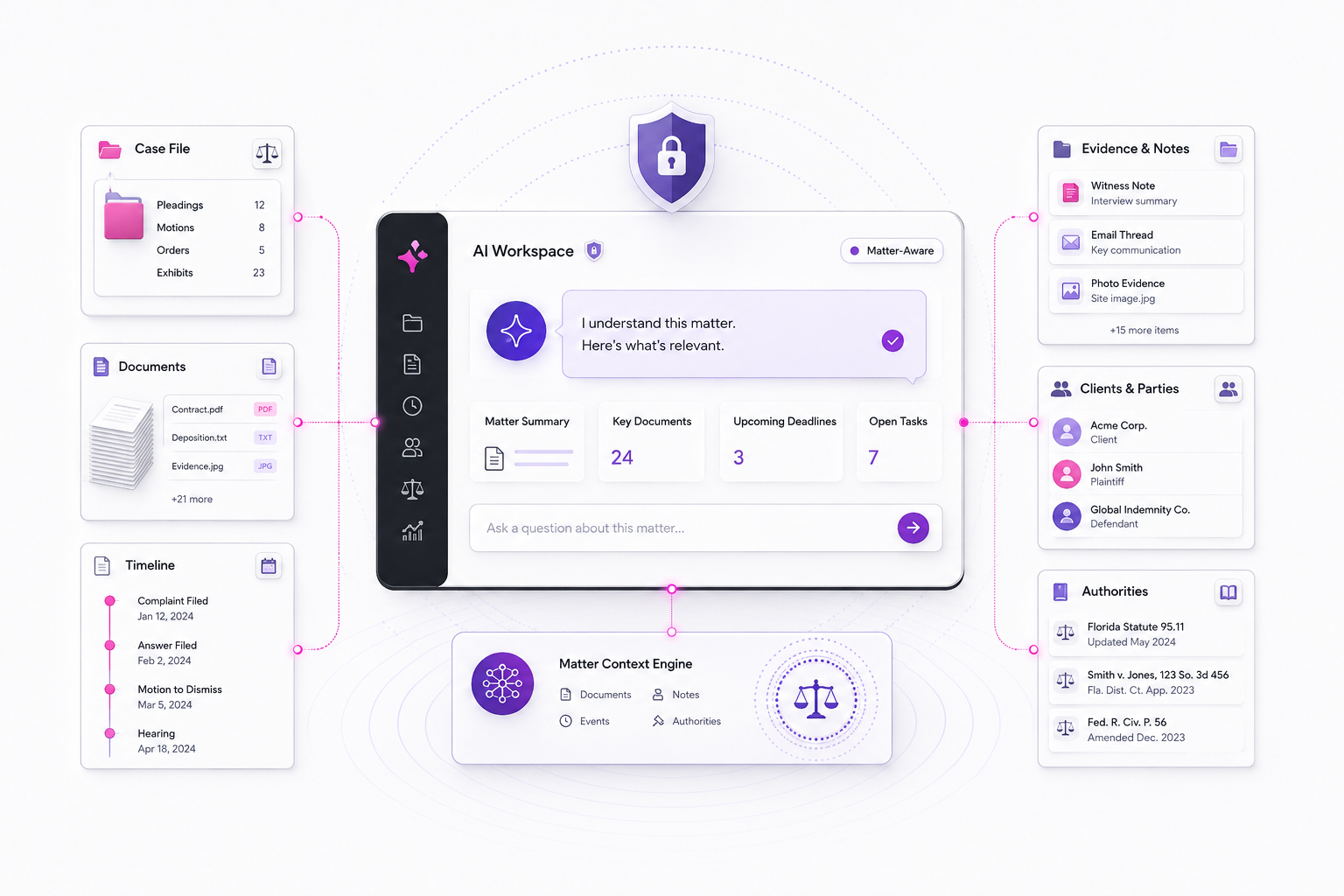
The setup is straightforward. The firm uploads its document library to a private instance. Templates, closed case files, exemplary briefs, client correspondence, intake forms, the kinds of documents that hold the firm's accumulated way of doing things. The AI builds a searchable, queryable knowledge base around all of it.
When the new paralegal arrives and asks "how do we structure a pre-hearing brief for an SSDI case with both physical and mental impairments?" the AI can pull the firm's best examples and walk her through the structure. When she asks "how do we typically handle a client who keeps missing medical appointments?" the AI can surface prior correspondence the firm has used in similar situations.
This does not make the new paralegal an expert in week one. It means she has a 24/7 reference to the firm's own work. The senior paralegal's outputs are still in the building. They just live in the AI now instead of in her head.
For practices that are especially pattern-heavy, like Social Security disability, the effect is more pronounced. The firm has fought the same fact patterns hundreds of times. The AI gives the new paralegal access to all of it, instantly, from day one.
What to do this quarter
If you run a law firm and you are reading this thinking about your senior paralegal who could leave at any time, here is what I would do.
Start by listing the documents that hold your firm's institutional knowledge. Templates. Closed case files. Recent briefs that you are proud of. Exemplary client letters. Intake forms. SOPs that are accurate. This is your firm's actual knowledge base. It is probably 200 to 2,000 documents. Most of it is already in your case management system.
Then ask honestly: if your senior paralegal left tomorrow, how long would it take a new paralegal to become productive using these documents? If the answer is "weeks," the documents are not organized usefully. If the answer is "months," the documents are not findable at all. Either way, you have a knowledge management problem that is invisible until the day it suddenly is not.
The fix is to make the documents queryable. A private AI trained on those documents is one approach. A well-organized internal wiki, kept current, is another. Either works. Neither is free. Both cost less than losing six months of productivity when a key paralegal leaves.
If you want to see what an AI-based approach looks like for your specific firm, get on a call with us. We will load a few sample documents from your practice area and show you what queryable institutional memory feels like. If DVLPstudio Legal Intelligence is the right fit, great. If not, we will tell you that directly and point you toward what is.
The senior paralegal will leave eventually. Everyone does. The question is what stays behind.